Mysticism is often seen as an escape from external reality, but perhaps it offers one of the most effective ways to engage the challenges our world faces today. Perhaps the journey inward helps us ground ourselves for more effective and sustained engagement with the world.
Buddhism is sometimes criticized for not being socially engaged. It is seen by some as a retreat within and an attempt to simply escape the suffering of this world, but that is not the whole story of Buddhism. The only way to truly escape suffering is to live a life of engaged compassion in relation to others, including all of life. This is why the late Vietnamese Buddhist monk Thich Nhat Hanh emphasized the importance of engaged Buddhism. He was not adding something new to Buddhism, he was the calling the practice of Buddhism back to its roots of compassion found in the life and teachings of its founder.
This emphasis on socially engaged Buddhism is seen in the work and teachings of many of Thich Nhat Hanh’s students, including Peggy Rowe Ward and Larry Ward, who emphasize engagement with the world without entanglement with the world through grounding oneself and coming “home to what’s here now, to who is here now” and through “stillness and equanimity… engage in the suffering,” while also being able to “let go of it all.” – Larry Ward, “How to be Engaged without Becoming Entangled”
The wisdom of socially engaged Buddhism points to the importance of being mindful and fully present in one’s engagement with the world. By intentionally taking the mindful journey within, one is able to understand one’s place in this web of relationships we call life and to see more clearly how they can show compassion for others in the web of life. By becoming more fully mindful, we become more present rather than less present to others and their suffering without being entangled in the systems that perpetuate their suffering.
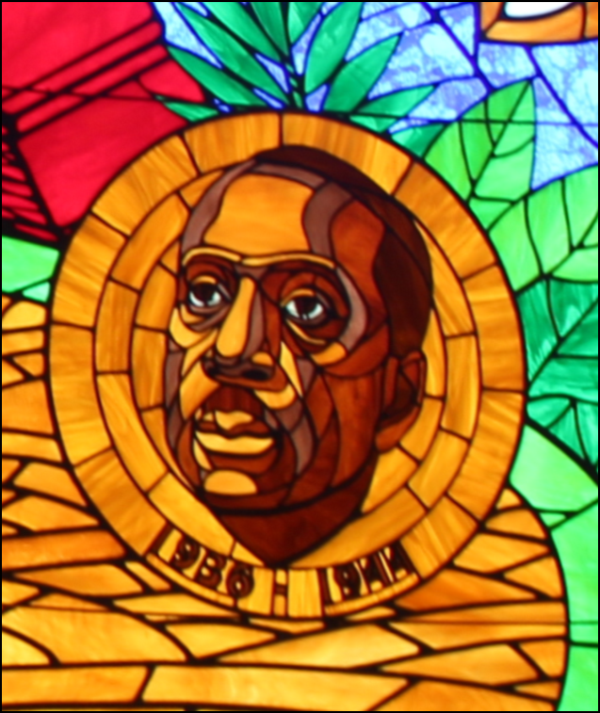
The great African American Christian mystic Howard Thurman lived from 1899 to 1981 and was Dean of the Chapel at Howard University and Boston University for many years and was a significant mentor for many civil rights leaders, including Martin Luther King Jr. Thurman was sometimes criticized for being too much of a mystic and for not engaging as much on the front lines of the civil rights movement, but very few persons played a more prominent role in the civil rights movement than Thurman, for it was through his journey within and through his mindfulness of the love of the Divine Mystery that Thurman was able to fend off what he called the three hounds of hell, which he identified as fear, deception, and hate, and more fully engage in the transformative power of love in this world for the sake of justice and the dignity of all persons.
It was no accident that so many civil rights activists sought out Thurman when their spirits were down and their spiritual tanks were running on empty to help them reconnect to their inner strength and the power of love in the world in order re-engage their urgent work for justice in an unjust world full of racism, poverty, and militarism. The mysticism of Howard Thurman was in many ways the spiritual fuel that helped make an effective and sustained nonviolent movement for civil rights a reality.
The founder of the Catholic Worker Movement, Dorothy Day, who lived from 1897 to 1980, is another example of a great social justice advocate and activist grounded in the mindfulness of mysticism. Her movement for workers’ rights and social justice is often referred to as a “revolution of the heart” grounded in spiritual practices and prayer. Dorothy Day’s inward journey provided her with the commitment and courage to become one of the most important advocates for social justice in the United States during the 20th Century, and the power of her legacy continues to inspire the workers’ rights movement to this day.
What is the lesson of these mystics for us today? What wisdom can we gain from them as we work to engage the urgent challenges and injustices of our time?
First, it is important to keep an eye on our spiritual fuel gauge. When we are getting close to empty, it is time to find a way to refuel in whatever way works best for us, whether that be connecting with nature, practicing meditation, engaging in prayer, or simply taking time to rest to take care of our bodies and spirits.
Second, we should not view taking time for our inner journey as a disengagement from the world but rather as preparation for more mindful and loving engagement with the world. We cannot be effective advocates for justice for a sustained period of time if we are burned out and our spirits our broken. Being present to ourselves and loving ourselves help us to be more fully present and compassionate with others.
Third, we should not allow the inward journey to become all-consuming to the point that we lose touch with the suffering of the world. The point of socially engaged mysticism is to experience the creative tension between our inward journey and outward expressions of compassion and doing justice The world does not need spiritually burnt out persons with nothing left to give in the work for justice, but we also don’t need isolated solipsistic hermits and spiritual recluses who have disconnected themselves so much from the world that they are no longer actively engaged in the world’s transformation.
The great lesson of the socially engaged mystics is that we must look within and look mindfully at the world around us in order to sustain our commitment to love and justice and to be fully present to a world so desperately in need of our engagement with it. May we all be mindful of who we are, and may we be fully present with one another in beloved community.
 One World House - Mark Davies
Beautifully said. And now I will go out on my deck, look up at the stars, and pray that the Spirit will work through me to somehow bring strength, solace, understanding, and healing to this suffering world.