It is normal and justified to be scared in times like these. Political violence is on the rise, governmental power is being misused and abused, high profile critics of our government are being unjustly prosecuted by a justice department controlled by an autocratic president seeking to punish his political opponents, academic freedom and freedom of speech and assembly are under extreme threat at our colleges and universities, pristine areas of nature are being plundered for short-term and unsustainable economic gain, access to affordable healthcare for millions of persons is under imminent threat, cities are being occupied by our own military, immigrants are being disappeared into concentration camps both inside and outside of the United States and to other places we know not where, our Navy is blatantly flouting international law by carrying out extrajudicial executions of unidentified persons on boats who may or may not be connected to drug cartels, and the most vulnerable among us are experiencing increased attacks simply for being who they are.
To make matters worse, the institutions that we thought would protect us from autocracy and fascism have proven to be grossly inadequate, and they are more often than not part of the problem rather than part of the solution. It is difficult to see a light at the end of the fascist tunnel in which we as a society currently find ourselves.
Martin Luther King Jr.’s question posed in 1967, “Where do we go from here: chaos or community?” seems as relevant now as ever before. Though we long for beloved community, we are experiencing chaos, and now we must ask ourselves, “How can we find courage within community in the midst of this chaos?”
I have found it helpful to learn from the experience of others who found courage in times of chaos, and my time earlier this month in South Africa led me to reflect on the courage that so many black South Africans expressed during their experiences of the injustice of apartheid. In a time of extreme racial injustice and economic injustice, so many black South Africans had the courage to resist apartheid even though doing so came with grave risks to their freedom and to their very lives.
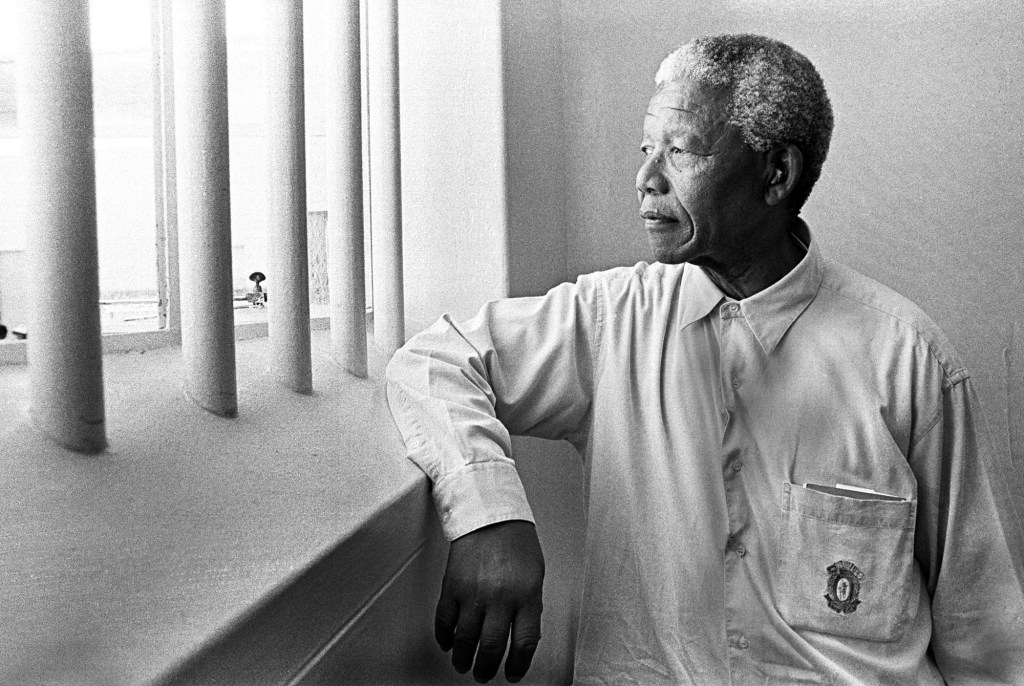
No one from my generation will ever forget the 27 years that Nelson Mandela who was the leader of the anti-apartheid movement spent in prison before finally being released in 1990. Perhaps our memory of the triumph of Mandela’s release from prison and his subsequent election to the presidency of South Africa might overshadow the fact that because of the courage of his convictions, Mandela languished in prison for 27 years.
In reflecting on his time in prison and the sacrifices he made in his resistance to apartheid, Mandela wrote:
I learned that courage was not the absence of fear, but the triumph over it. The brave man is not he who does not feel afraid, but he who conquers that fear.
Long Walk to Freedom
As courageous as Mandela was, he could not resist apartheid alone. He needed the support and courage of his community – a community that included countless unknown persons who kept up the resistance to injustice even when all seemed lost. Some of those persons are well-known to us – Rev. Desmond Tutu for example, who tirelessly and relentlessly spoke out for justice and encouraged the rest of the world to be in solidarity with black South Africans and end the evil of apartheid.
Desmond Tutu reminded us that we must have the courage to take sides in situations of injustice. Neutrality in relation to injustice is not a moral option. Tutu proclaimed, “If you are neutral in situations of injustice, you have chosen the side of the oppressor” (as quoted by Robert McAfee Brown, Unexpected News,1984).
Neutrality did not bring the evil of apartheid to an end. It took the moral pressure of the international community through economic sanctions and economic boycotts of the apartheid government to finally bring justice to the people of South Africa. Justice requires taking a side.
In our time of injustice and chaos, we will also need the support of a community we can trust in order to cultivate and sustain the courage necessary in times like these to take the side of justice. The pressures to remain silent are ever present, and the risks of speaking out are real; but it is important to always remember that there are so many siblings within our community who are extremely vulnerable during this dark time for our country.
History has shown us the danger of being silent in the face of hate and oppression and threats to human rights, and therefore we cannot be silent. Borrowing from the baptismal vows of my faith tradition, Every person is called “to resist evil, injustice, and oppression in whatever forms they present themselves” (from the baptismal vows of The United Methodist Church).
It is critical that we have courage in our work to protect the most vulnerable from those who are actively seeking to do them harm. We need to find courage in the chaos for the sake of our transgender siblings whom the fascists want to erase. We must find courage in the chaos for our immigrant siblings whom the fascists want to disappear from our communities. We must find courage in the chaos for all of our sisters whom the fascists want to control with the shackles of patriarchy. We must find courage in the chaos for all the those around the world whom fascists are threatening with the evil of violence and militarism. We must find courage in the chaos for the millions of persons whom the fascists are sinking deeper into poverty and economic injustice around the world.
Communities who value justice hold a deep moral responsibility in times like these. it is our moral responsibility to keep the light of freedom, justice, and equity shining in the darkness. It is our moral responsibility not to be silent. It is our moral responsibility to protect the most vulnerable. It is our moral responsibility to this generation and generations of life to come to never give up because every act of resistance counts in the work for true freedom and justice for all. It is our moral responsibility to find courage in the chaos like so many who have gone before us.
May we find this courage in the chaos from one another in our life giving work together for beloved community. Only then will we have a chance to move from chaos to community. May it be so.
If you find the writings at One World House by Mark Davies helpful or inspiring, you can show your support by making a contribution using Venmo or Patreon or PayPal
 One World House - Mark Davies