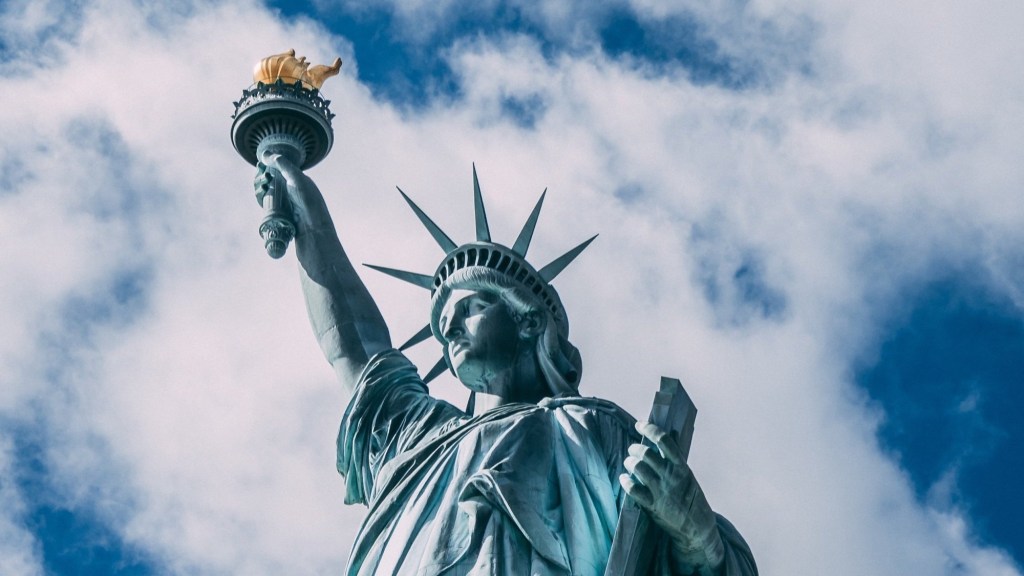
The existentialist philosopher Simone de Beauvoir reminds us in her book The Ethics of Ambiguity that responsible freedom entails willing ourselves to be free while also willing others to be free (p. 73). Responsible freedom is not freedom over others, it is rather freedom with others, and such a true and responsible freedom leads us to be in solidarity with one another and to work for the liberation of others when they are being oppressed by those who are using their freedom in irresponsible ways.
True freedom includes not only the freedom from being harmed by others, but also the freedom for doing actual good within the community of all life. The well-known historian Timothy Snyder shares this view of freedom as being more than just “freedom from” in his recent book On Freedom. Snyder’s makes the case that many of us in the United States have focused almost exclusively on negative freedom (freedom from), rather than on positive freedom (freedom for and freedom to).
Snyder notes that freedom is not just the absence of evil, but it is also the presence of good (On Freedom, p. x). It is freedom for love, for compassion, for kindness, for justice. The key to responsible freedom is that we use it to bring positive good into the world, thus responsible freedom and virtue are linked together.
In Snyder’s view, when we think of freedom only in the negative sense as a “freedom from,” there is more of a tendency to view freedom as a given rather than something that must be constantly created, something that must be won in each generation for the sake of itself and future generations. Snyder warns that “[t]he moment you believe that freedom is given, it is gone” (On Freedom, p. xiv).
Perhaps this is why the United States is currently losing its freedom so quickly. We overemphasize freedom from rather than freedom for and freedom to – freedom from restrictions, freedom from regulations, freedom from government, and freedom from taxes, rather than freedom for cultivating the well-being and flourishing of the whole human community and the community of all creation, rather than freedom to do all the good we can for all the people we can and for all the sentient beings we can as long as we ever can.
Our overemphasis on negative freedom rather than positive freedom has led the United States to become less free than it otherwise could be. Even though we celebrate in word and song that we are the “land of the free,” Snyder notes that when it comes to basic civil and political liberties, there are fifty countries in the world that rank higher than the United States, and when you measure freedom in a more positive sense as freedom for and freedom to, and include for example freedom to have quality and accessible healthcare, the United States falls even more in the global rankings (On Freedom, 30).
In short, our focus on negative freedom, on freedom from rather than freedom for and freedom to, is making us less free. We see this in our precipitous fall in the Democracy Index over the last decade, and in the fact that we are no longer seen as a full democracy but as a flawed democracy with a significant risk of becoming a failed democracy as we move into a full blown autocracy. We also see that this loss of freedom is making us measurably less happy, less healthy, less educated, and more corrupt as a society. Now when we sing the words “land of the free,” it is becoming more and more a memory of what has been lost or an aspiration for what we may someday become, but less and less a lived reality in the present.
To become more free rather than less free, we must embrace a more positive view of freedom, and this would have a profound effect on how we govern ourselves, and how we see the role of government in our lives. A negative view of freedom fosters a view of government as a barrier that gets in the way of freedom. Such a view has contributed to an obsession with deregulation that is making us less safe and less healthy and is damaging the well-being of the natural world. Such a view also has led many to favor cutting government programs so quickly and so deeply that we seem to be willing to cut off our own noses to spite our faces.
Freedom in the positive sense, as freedom for and freedom to, recognizes a positive role for government in which government is actually guided by the principles of positive freedom and its work to bring about good in society (On Freedom, p. xvi). Good government is guided by freedom and is necessary to preserve freedom. It is a myth, usually propagated by autocrats and oligarchs, that government is necessarily a barrier to freedom. It is demonstrably the case throughout the world that the most free peoples do not focus on having less government, but rather on having a better government for the well being of all persons. Countries with better governments are not only more free and democratic; they are also happier, healthier, more educated, more sustainable, and less corrupt than countries that obsess over making their governments smaller.
I believe that a significant takeaway from Timothy Snyder’s insights is that if the United States is to have any chance to move our societal needle towards more freedom rather than less freedom; we will have to be much more intentional about focusing on not only what we are against, but also on what we are for.
For the United States of America to be truly free, we will have to be more than just free from fascism or free from communism. We will have to be more than just free from autocracy or free from totalitarianism. To be truly free and to be responsibly free, we will have to be free for the well-being of each other and be free for the well-being of the community of all creation, and this entails solidarity with the most vulnerable among us and working for their liberation. True and responsible freedom is freedom for just and beloved community. It is only with this vision and this commitment about what freedom is for that we will be able to have both a good government and a good society.
May we all use our freedom responsibly to make beloved community a reality, and may we always remember that “freedom is not just an absence of evil but a presence of good” (On Freedom, p. x). True freedom is never simply given. It must be constantly and continually created. It must be constantly won. If we remember this, and if we are brave enough to live into it more fully, then maybe, just maybe, we might have a chance to someday become that to which we aspire: the land of the free.
If you find the writings at One World House by Mark Davies helpful or inspiring, you can show your support by making a contribution using Venmo or Patreon or PayPal
 One World House - Mark Davies
Dear Dr mark . Our freedom is written in Galatians 5:1 Christ gave us full freedom . Bless you Dr Gezu From Ethiopia🇪🇹