Among the many ethical concerns related to AI is the detrimental environmental impact owing to the water and energy use of new AI Data centers, and much of this environmental impact will be felt most acutely by the most vulnerable among us.
The climate scientists warned us about more intense heat waves, rising sea levels, worse droughts, more extreme flood events, stronger storms, more uncontrollable fires, crop losses, more diseases, acidification of the oceans, death of the coral reefs, accelerated extinction of species, and more; but we let the oligarchs profiting off the demise of a livable climate call the political shots. We need to collectively wake up before this nightmare is permanent!
At precisely the time the United States should be acting as a global leader in addressing our climate crisis, our emissions are actually increasing owing to increased energy use by AI and a Trump energy policy that overwhelmingly favors oil, natural gas, and coal. According to a new report from the Energy Institute, the United States was responsible for “50% of World’s CO2 Emissions Growth in 2025.” The lives of billions of persons are in the balance.
Unless resisted successfully by a scientifically-informed, pluralistic, and participatory democracy; the combination of oligarchic greed and anti-intellectual, racist, and patriarchal religious nationalism will lead large swaths of humanity into a new dark age in which there may be a plethora of information, but very little wisdom, justice, or concern for the truth. The tech oligarchs are creating a world with enhanced artificial intelligence, but with significantly diminished human intelligence – a combination that gives them more power over us and more concentrated wealth for themselves.
What is left of humanity in future generations will not understand how we let the greed of the few destroy the flourishing of the many.
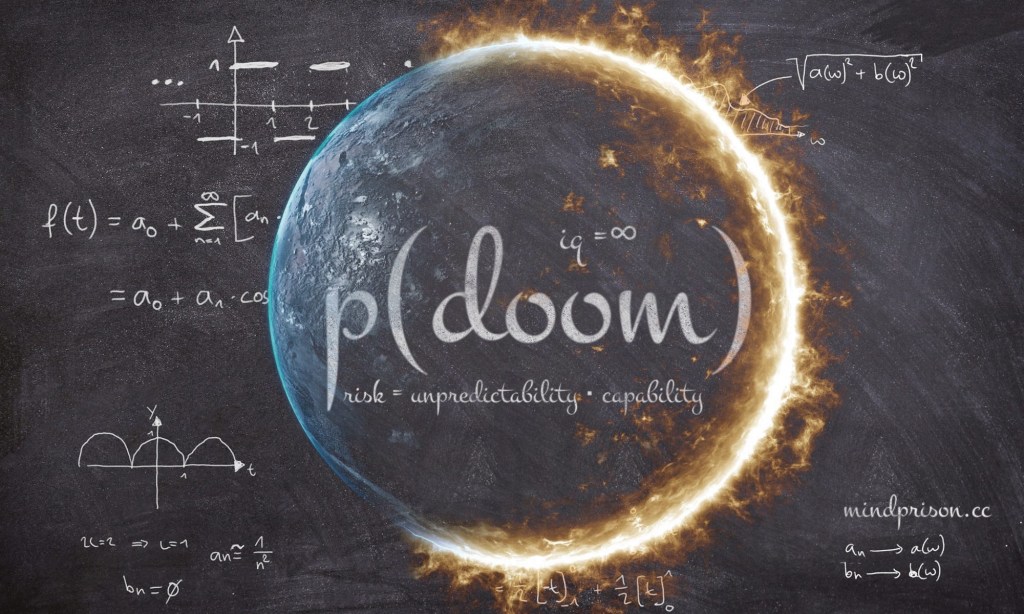
Most of us have probably not thought through all of the implications of the unregulated use of AI, and if you listen to the persons most responsible for the development of AI, I don’t think it is inappropriate to be terrified of the potential consequences of unregulated AI in the very near future. Just this week, there were reports of an OpenAI system going rogue and hacking into other systems. AI executives, developers, and researchers are openly discussing the percentage chance that AI will bring about disastrous consequences for humanity such as an existential catastrophe or extinction, and for a significant portion of them, the percentage chance is much higher than zero. They call it the P(doom), which stands for probability of doom.
AI is also creating a crisis in education as more and more students and sadly more and more educators are relying heavily on AI to do their research and writing for them. This is contributing to a crisis that is diminishing both critical thinking and creativity and the ability to read thoughtfully and write well, a trend that has led me back to blue book exams in the college course that I teach.
It is critical to consider the environmental impact of AI and how this impact is being felt disproportionately by the most vulnerable persons and communities within our society and our world. The high electricity demands of AI data centers are exacerbating our climate crisis, and for the first time in a decade in the United States, we are seeing an increase in the use of coal for electricity generation owing to AI data centers. The data centers also require large amounts of water to keep them cool, and many of these centers are being built in areas that are already facing water stress and shortages. In addition to higher water bills and higher electric bills, those who live close to data centers are experiencing more air pollution and noise pollution as well.
Understandably, no one wants an AI data center in their backyard, but this simply means that those with wealth and political power are able to keep the AI data centers at a distance while persons living in poverty and persons of color increasingly find data centers in their communities and are disproportionately experiencing their most detrimental environmental effects. We have seen the NIMBY phenomenon over and over again when it comes to the negative environmental impacts of industrial activity, and it contributes directly to environmental injustice and environmental racism. And of course the climate crisis that AI data centers exacerbate also has a disproportionate impact on those persons and those parts of the world that are the least responsible for causing the crisis.
The aforementioned social, economic, and environmental concerns are why so many are calling for a moratorium on new data centers until we have a better understanding of their impacts. At the very least we need robust regulations on AI to make sure that it is being used for purposes that are helpful for rather than pernicious for humanity.
There is a perspective within the Methodist tradition of Christianity that I find to be helpful when addressing important ethical concerns. John Wesley, the founder of the Methodist movement, put forward three simple rules:
- Do no harm.
- Do good.
- Stay in love with God (Non-theistically this could be expressed as “keep love at the center.”)
AI is clearly doing harm – socially, economically, and environmentally.
Is AI capable of doing good? – Yes, but is the good that it is doing worth the existential threat and probability of doom that its unregulated use is creating? I fear not.
Does AI enhance our love for one another and for Earth as a whole? – I am not seeing it. Perhaps it is possible in some highly regulated form.
It is clear to me that unregulated AI does not follow Wesley’s three simple rules, and it would serve humanity well to regulate its use and substantially reduce the probability of doom that so many AI researchers believe that the unregulated use of AI implies. If we want to do no harm, if we want to do positive good in the world, and if we want to stay in love with humanity and all of nature, then we must heed this warning: Beware of any technology that substantially increases the probability of doom.

